
I have sat across from homeowners who were told their house was "structurally unstable" and that they had "days, not weeks" to decide on a $25,000 repair. I have read contracts that were signed at 9 p.m. on a Friday, after a two‑hour presentation filled with photos of cracks, leaning chimneys, and water‑stained basements.
And I have seen what happens when you stop, take a breath, and ask one simple question:
"Can you show me the measurements?"
In almost every case, the panic subsides. The "emergency" turns out to be a normal settlement crack. The $25,000 quote becomes a $4,000 drainage fix. And the contractor who demanded an immediate signature quietly disappears.
Foundation repair is the most fear‑driven sector of the home improvement industry. It preys on the one thing every homeowner holds dear: the ground beneath their feet. When someone tells you your house is sinking, your brain stops processing details and starts processing survival.
That is exactly what the salesperson is counting on.
This article is not about diagnosing foundation problems. I am not a structural engineer, and you should not trust a blog for a structural diagnosis. What I am is a document reviewer—someone who has read hundreds of foundation repair contracts and watched how fear gets turned into cash.
Here is what I want you to know before you sign anything: urgency is not proof, and fear is not a diagnosis.
Why the "Your House Is Sinking" Pitch Works So Well
The pitch is almost always the same.
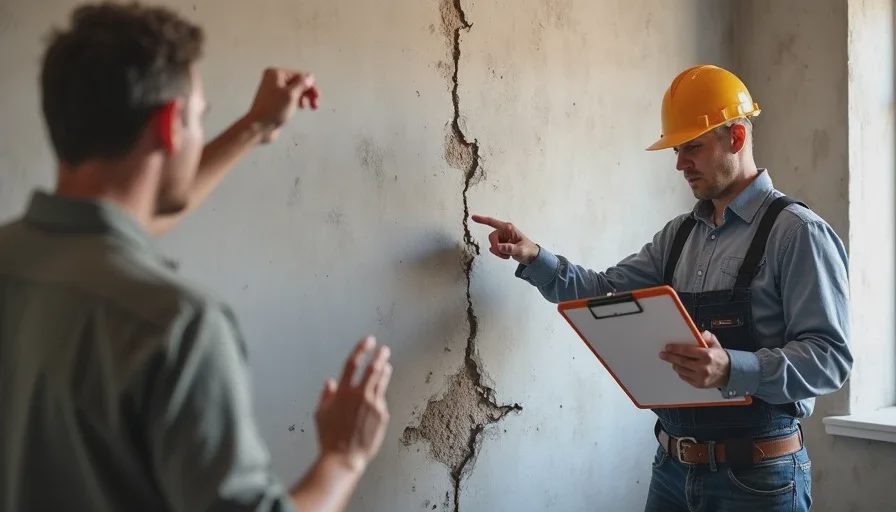
You get a call, a door knock, or a mailer. A "foundation specialist" offers a free inspection. They come to your home, walk around with a flashlight, point to a few cracks in your basement wall or a sticking door, and then deliver the bad news:
"Your foundation is settling unevenly. You have differential settlement. If you do not fix this now, your home will continue to sink and you will lose structural integrity. We can start next week."
Then they show you a contract with a price that makes your stomach drop.
Why does this work so well? Because it hits three emotional triggers at once:
Fear of catastrophic loss – your home is your largest asset.
Lack of expertise – you cannot tell a settlement crack from a structural failure.
Time pressure – the "next week" availability makes it feel like a limited opportunity.
The salesperson does not need to prove their diagnosis. They just need to keep you scared long enough to sign.
What Real Foundation Problems Look Like (and What They Do Not)
Not every crack is a crisis. In fact, most cracks in a home's foundation are normal settlement and do not require any structural repair.
Here is a simple distinction I use when reviewing inspection reports:
Normal Settlement (Usually Fine) | Structural Movement (Needs Evaluation) |
|---|---|
Hairline vertical cracks in poured concrete walls | Horizontal cracks or stair‑step cracks that are widening |
Minor cracking in mortar joints | Cracks wider than 1/4 inch |
Sticking doors that come and go with humidity | Doors or windows that no longer latch at all |
Small gaps between drywall and trim | Gaps that are growing over time |
No water intrusion | Persistent water or moisture |
The problem is that a salesperson will show you a photo of a hairline crack and call it "active settlement." They will not measure it. They will not monitor it over time. They will not tell you that many cracks stabilize on their own after a few years.
A legitimate structural engineer will measure cracks, place monitors on them, and recommend observation over time. A foundation repair salesman will skip the observation and go straight to the sale.
The Hidden Cost of the "Free Inspection"

The "free inspection" is not an inspection. It is a sales appointment.
The person who comes to your home is almost never a licensed structural engineer. They are a sales representative trained to identify problems—and to present the most expensive solution as the only solution.
They will often recommend:
Helical piers or push piers driven deep into the ground
Slab jacking or polyurethane foam injection to lift the slab
Carbon‑fiber straps to reinforce bowing walls
All of these are legitimate solutions—for the right problem. But they are also high‑margin products. The salesperson's compensation often depends on the size of the contract, not the accuracy of the diagnosis.
That is why you must separate the diagnosis from the solution. Do not let the same person who diagnoses your foundation sell you the repair. Get a second opinion from an independent structural engineer who does not perform repairs.
A structural engineer will charge you $400 to $800 for a site visit and a written report. That is money well spent. That report will tell you what is actually happening, what is not, and whether any repair is even necessary.
If a foundation contractor refuses to wait for an independent engineer's report, that tells you everything you need to know about their confidence in their own diagnosis.
What a Foundation Contract Should Include (and What Is Usually Missing)
When you do receive a foundation repair contract, treat it like a medical consent form. It must specify the exact condition, the exact treatment, and the expected outcome.
Here is what I look for in every foundation scope:
1. A Measured Diagnosis
The contract should reference the engineer's report (if you have one) or include specific measurements: crack widths, elevation differences, slope percentages. If the contract says "settlement" without numbers, it is a guess, not a diagnosis.
2. A Detailed Description of the Repair Method
"Install piers" is not enough. The contract must specify:
Type of pier (helical, push, or drilled)
Depth to be driven or installed
Bearing capacity required
Attachment method to the foundation
Number of piers and their locations (with a diagram)
3. Scope of Excavation and Restoration
Will they dig outside your house? How deep? Who restores the landscaping, concrete walkways, or interior drywall? A complete contract spells out who cleans up, who backfills, and who repairs the damage caused by the repair itself.
4. Warranty Terms
Foundation repairs are expensive, and they come with long warranties—sometimes 20 years or more. But read the fine print. The warranty may be transferable (good for resale) or non‑transferable (worthless when you sell). It may require annual inspections at your cost. It may exclude certain types of soil movement.
5. Permit and Inspection Responsibility
Just like any other major structural work, foundation repairs require permits and inspections. The contract must state who pulls the permit and who schedules the inspections. If the contractor says "we do not need a permit for this," walk away. That is a lie.
The Most Common Omission: Drainage and Soil Stabilization
Here is the detail that is missing from 80% of foundation contracts I review: the cause of the problem.
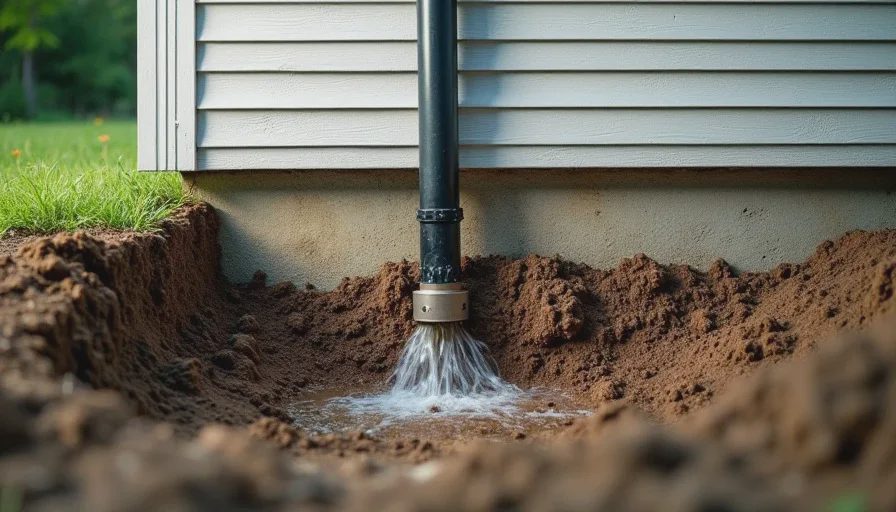
A foundation does not settle for no reason. It settles because water has softened the soil, or because a tree root has pulled moisture from the clay, or because a downspout is dumping water against the foundation.
If you fix the symptom (the piers) without fixing the cause (the drainage), the problem will return. And the contractor knows this. That is why they leave drainage improvements out of the contract—so they can sell you a second repair in five years.
A complete scope should address:
Gutters and downspouts—are they directing water away from the foundation?
Grading—does the soil slope away from the house?
Soil moisture management—is there a need for a French drain or sump pump?
If the contract only talks about piers and never mentions water management, you are buying a partial solution. And partial solutions are expensive.
How to Respond to a Fear‑Based Pitch
If a foundation salesperson tells you your house is sinking, here is a script I have given to dozens of homeowners. It is calm, clear, and it buys you time.
"Thank you for your assessment. I understand you are concerned about the foundation. I am going to have an independent structural engineer take a look before I make any decisions. Please leave a written estimate and your references, and I will call you if I decide to move forward."
If they push back—say the engineer will take too long, or the price will go up, or they cannot guarantee availability—that is your confirmation that they are more interested in the sale than in the truth.
A reputable foundation contractor works with engineers every day. They expect second opinions. They welcome them. They know that an informed customer is a better customer.
My Rule for Older Homeowners
When it comes to foundation work, I have one rule that has never failed:
Never buy a structural repair from the person who diagnosed it.
The diagnosis should come from an independent engineer who does not perform repairs. The repair should come from a contractor who can show you the engineer's report, the permit, and the detailed scope—all in writing.
Fear is not a reason to sign. It is a reason to pause.
Slow the paper down. Call an engineer. Read the scope. Check the warranty. And remember: your house has stood for decades. It can wait a few more weeks while you make a safe, informed decision.