
You have a foundation repair quote in your hand. It is detailed. It includes piers, excavation, and a warranty. It is also $24,000.
The salesperson who gave it to you spent two hours in your basement, pointing out cracks and explaining why their system is the best. They showed you photos. They gave you a folder with testimonials. They told you that your home is settling unevenly and that delaying will only make it worse.
Now you are sitting at your kitchen table, staring at the number, wondering if you can afford it—and wondering if you really need it.
Here is what I have learned reviewing hundreds of these cases: a detailed quote is not the same as a verified diagnosis. And a verified diagnosis is the only thing that should justify a $24,000 structural repair.
That is why I recommend a second opinion—from a licensed structural engineer who does not perform repairs. Not from another foundation contractor. From an engineer. And I recommend you pay for it.
This article is about when to pay for that second opinion, what it will give you, and why it is almost always worth the cost.
The Problem with Free Estimates

The foundation contractor gave you a free estimate. That estimate cost you nothing. But it also cost you something else: independence.
The contractor who gave you the estimate has a financial interest in the outcome. If they diagnose a problem that requires their repair, they get paid. If they tell you the problem is minor and you do not need their services, they get nothing.
That is not an accusation of dishonesty. It is a description of incentives. And incentives matter.
A free estimate from a contractor is a sales presentation. It may include accurate information. It may include measurements. But it is still a sales presentation. And a sales presentation should never be the sole basis for a major structural decision.
A paid second opinion from an independent engineer has no financial interest in the outcome. They get paid the same whether they recommend a $25,000 repair or a $500 drainage fix. That independence is what makes their opinion valuable.
The Three Triggers for a Second Opinion
Not every foundation crack requires a second opinion. But there are three specific triggers that should make you pause and call an engineer.
Trigger 1: The Estimated Cost Exceeds $5,000
Any foundation repair that costs more than $5,000 is a major expense. And any major expense deserves independent verification.
A $5,000 repair is not a small decision. A $15,000 or $25,000 repair is a life-altering expense for most retired homeowners. If you are being asked to spend that much, you have the right to have an independent professional verify that the work is necessary.
I have seen cases where a $25,000 pier recommendation was replaced by a $3,000 drainage solution after an independent engineer reviewed the site. The engineer did not find anything the contractor missed. They just interpreted the same evidence differently—and recommended the simpler, cheaper solution first.
Trigger 2: The Repair Is Invasive or Irreversible
Some foundation repairs are reversible. Drainage improvements can be modified. Grading can be changed. Soil moisture management can be adjusted.
But piers—helical piers, push piers, or drilled piers—are permanent. They are driven deep into the ground and attached to your foundation. Once they are installed, they are there for the life of the home. Removing them is not practical.
An invasive, permanent repair is not something you want to decide based on a single sales presentation. You want an independent engineer to review the plan and confirm that it is the right solution for your specific soil conditions, home design, and drainage situation.
Trigger 3: The Diagnosis Does Not Match What You See
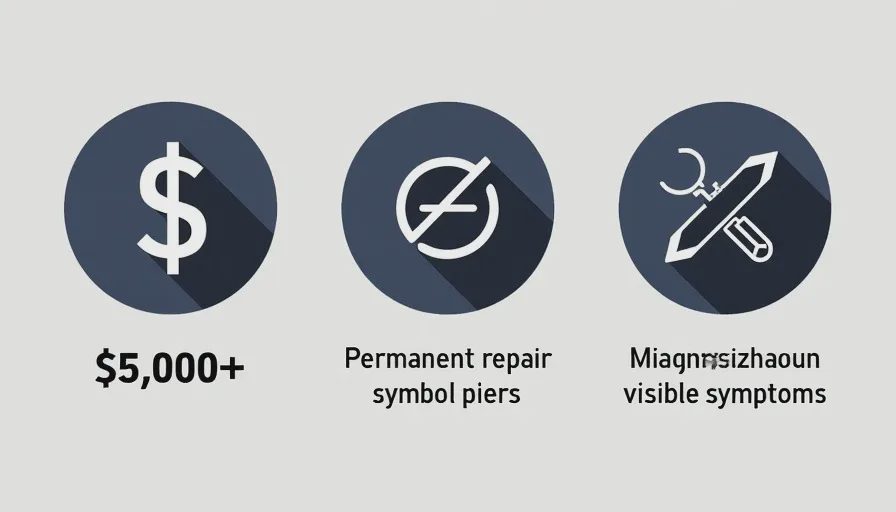
If the contractor tells you your house is "sinking" but you do not see any major cracks in the drywall, no sticking doors, and no water in the basement, that is a red flag. You cannot diagnose active settlement without visible symptoms. If the symptoms do not match the diagnosis, you need a second opinion.
Similarly, if the contractor tells you the problem is "urgent" and cannot wait a few weeks for an engineer, that is a red flag. Foundation movement is slow. It happens over years, not days. A few weeks for an engineer's evaluation will not change the outcome—but it may change the diagnosis.
What an Independent Engineer Actually Does
A structural engineer does not just look at your cracks and say "repair" or "don't repair." They do a systematic evaluation that includes:
A floor elevation survey—measuring the height of your slab at multiple points to determine how much settlement has occurred and whether it is uniform or differential.
Crack measurements—measuring the width, length, and orientation of every significant crack, and determining whether they are active or stable.
A drainage assessment—evaluating the grading, gutters, downspouts, and soil moisture conditions around your foundation.
A structural analysis—determining whether the cracks indicate a structural problem or cosmetic settling.
A written report—with specific findings, measurements, and recommendations.
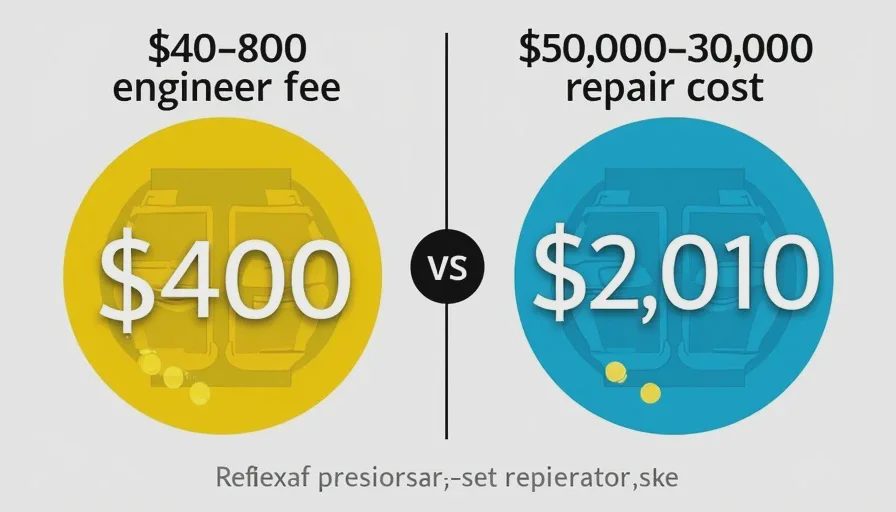
That is what $400 to $800 buys you. It buys you a diagnosis, not a sales pitch.
And here is what that report allows you to do:
Compare the Engineer's Plan to the Contractor's Plan
An independent engineer may recommend:
Do nothing and monitor the cracks annually
Improve drainage and re-evaluate in one year
Partial repair (e.g., crack injection or localized underpinning)
Full repair (piers, excavation, and stabilization)
When you compare the engineer's recommendation to the contractor's proposal, you will see one of three things:
They match: The contractor's proposal is consistent with the engineer's diagnosis. That gives you confidence to proceed.
They differ significantly: The contractor is recommending more work than the engineer thinks is necessary. That tells you to get a third opinion or push back on the contractor.
The contractor refuses to accept the engineer's report: That tells you the contractor is not interested in independent verification—and you should not hire them.
The Cost-Benefit Math
Let me do the math for you.
A structural engineer costs between $400 and $800 for a site visit and a written report. A foundation repair can cost anywhere from $10,000 to $30,000.
Even if you only need the engineer 10% of the time to save you from an unnecessary repair, the math works. But in my experience, the engineer saves homeowners from unnecessary repairs much more often than 10%.
I have reviewed cases where an engineer's report saved the homeowner:
$25,000 by recommending drainage instead of piers
$12,000 by recommending crack injection instead of full underpinning
$8,000 by recommending monitoring instead of immediate repair
The $800 fee is not an expense. It is an investment with a guaranteed return. Either you save thousands by avoiding an unnecessary repair, or you gain the confidence to proceed with a necessary one. Either way, you win.
How to Hire the Right Engineer
Not every engineer is right for this job. Here is what to look for:
1. Licensed Professional Engineer (P.E.)
The engineer must be licensed in your state. You can verify their license on your state's licensing board website.
2. No Affiliation with a Repair Company
The engineer must be independent. They should not perform repairs, refer specific contractors, or have any financial arrangement with a foundation repair company. If they recommend a specific contractor by name, that is a red flag.
3. Experience with Residential Foundations
Some engineers specialize in commercial or industrial structures. You want someone who has experience with single-family homes, slab-on-grade, and basement foundations.
4. A Written Report
A verbal opinion is not enough. You need a written report with measurements, photos, and specific recommendations. This report is your documentation if you need to dispute the contractor's proposal.
What to Tell the Contractor
When a foundation contractor presents you with a repair plan, you have the right to say this:
"Thank you for the proposal. I am going to have an independent structural engineer review it before I make a decision. I will be in touch once I have their report."
A reputable contractor will say, "That's fine. Take your time." A contractor who pushes back—who says the price will expire, or the engineer is not necessary—is telling you they do not want independent scrutiny.
You have the right to scrutinize. Use it.
What to Do When the Engineer Says "Not Necessary"
If the independent engineer tells you the repair is not necessary, you have saved a significant amount of money. But you also have a problem: the contractor who gave you the original proposal is not going to be happy.
Here is how to handle it:
Share the report with the contractor. Give them a chance to explain why they disagree with the engineer's findings.
If they cannot explain their disagreement in technical terms—if they just say "we've been doing this for 30 years"—do not hire them. They are relying on authority, not evidence.
Find a contractor who is willing to do the work the engineer recommends. If the engineer recommends drainage improvements, hire a drainage specialist. If they recommend monitoring, do nothing and wait.
Keep the engineer's report in your files. If you ever sell your home, you can show prospective buyers that a licensed engineer evaluated the foundation and found it stable.
My Rule for Older Homeowners
When you are facing a major foundation repair, remember this:
You are not required to trust the person who profits from your decision.
A free estimate is a starting point, not an ending point. If the proposed repair costs more than $5,000, is invasive, or does not match what you see, you owe it to yourself—and your savings—to get an independent second opinion.
The $800 you spend on an engineer is not an expense. It is the price of informed consent. And informed consent is the only kind of consent that protects you.