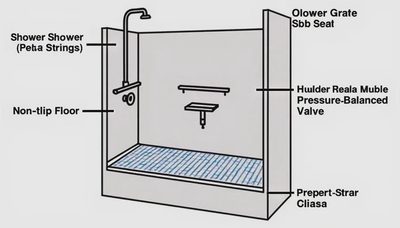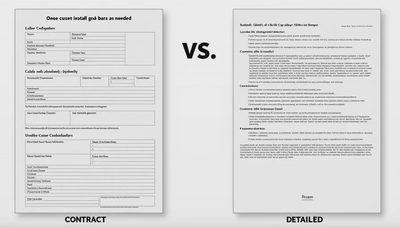
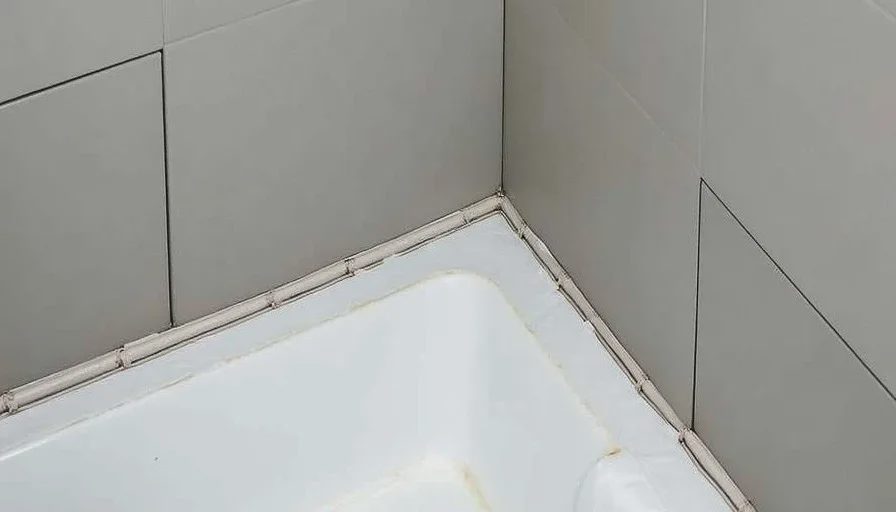
Of all the bathroom remodels I have reviewed, shower conversions generate the most expensive surprises relative to the size of the job. You are taking out a tub and putting in a shower. Simple enough, right?
Not quite.
The gap between a shower conversion quote and the final bill is almost always found in one place: the waterproofing details. Or, more accurately, the waterproofing details that are missing from the contract.
Here is what I have learned reviewing shower conversion contracts: a quote can look thorough and still leave out the parts that actually keep water from destroying your home. And when water finds its way through, the repair bill is not measured in hundreds. It is measured in thousands—sometimes tens of thousands.
Let me walk you through what a real shower conversion scope should say about waterproofing, and how to spot the omissions that will cost you later.
Why Waterproofing Is the First Thing Cut from "Competitive" Bids
Shower waterproofing is invisible. It goes behind the tile, under the floor, and inside the walls. You will not see it when the job is finished, and neither will your guests.
That makes it the perfect place for a contractor to cut costs while keeping the bid low. And that is the problem.
A low bid is not a bargain. It is often a bid that simply does not include the waterproofing details that a complete job requires. The contractor knows they can present a price that beats the competition. And they also know that most homeowners will never ask about the waterproofing membrane—until it fails.
Let me be blunt: tile and grout are not waterproof. They are water-resistant at best. Water will get through them. And when it does, it needs a proper waterproofing system behind it to channel that water to the drain. If that system is incomplete, the water goes into your wall cavity instead.
That is how rot starts. That is how mold starts. That is how a $12,000 shower conversion becomes a $30,000 structural repair.
The Seven Waterproofing Details That Should Be Written In
When I review a shower conversion quote, I look for these seven items. If any one of them is missing, the quote is incomplete—regardless of how "competitive" the price looks.
1. A Waterproofing System, Not Just "Water-Resistant Board"
Many quotes list the backer board (e.g., cement board, fiber-cement board, or gypsum-based board) and stop there. But the board is not the waterproofing. It is the substrate.
A complete scope specifies a waterproofing system that includes:
A moisture barrier behind the board (if applicable)
A surface-applied liquid membrane or sheet membrane over the board
Specific brand and product name (e.g., Schluter Kerdi, Wedi, HydroBan, RedGard)
If the quote says "cement board with waterproofing," that is not enough. Ask for the brand. Ask for the product name. A contractor who cannot tell you what they are using is a contractor who is probably using nothing.
2. Seams and Joints
Waterproofing is only as good as its seams. Every joint between boards, every corner, every seam—these are potential failure points.
A complete scope specifies that all seams, joints, and corners are sealed with the approved manufacturer's sealant, tape, or membrane. If the quote says "seams sealed" without specifying the material, it is an incomplete scope.
Look for language like:
"All board seams are taped with alkali-resistant mesh tape and coated with waterproof membrane."
"All inside and outside corners are reinforced with membrane tape."
"All fasteners are covered with waterproofing compound."
3. The Curb
If your shower conversion includes a curb (the step-over at the entry), that curb is a common failure point. Water sits on it, penetrates the grout, and finds its way through any gap in the waterproofing.
A complete scope specifies that the curb is fully waterproofed—not just the top, but the inside and outside faces as well. It should also specify that the waterproofing extends past the curb onto the bathroom floor for at least 6 inches.
4. The Shower Floor
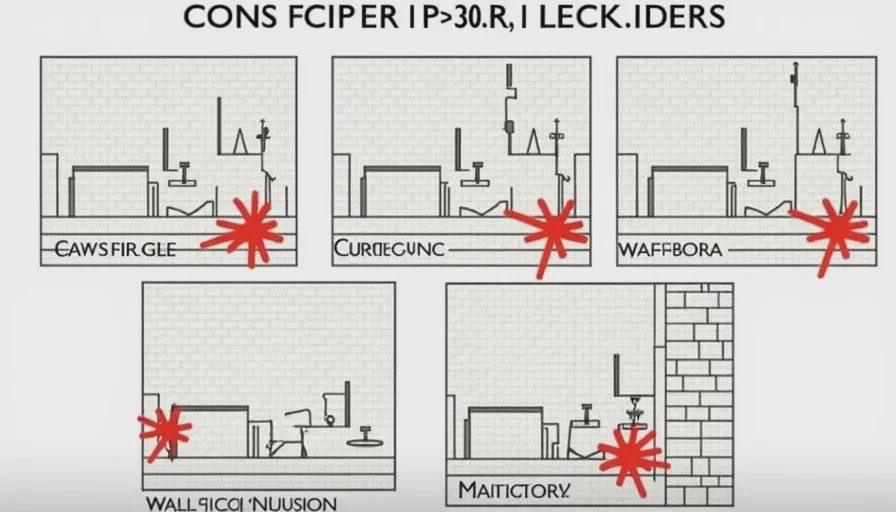
Shower floors are the most vulnerable surface in the entire assembly. They are constantly wet. And they are where most homeowners want tile—which, as I said, is not waterproof.
A complete scope specifies:
A pre-slope that directs water to the drain
A waterproof liner or membrane over the pre-slope
A final mud bed over the membrane
The slope percentage (typically 1/4 inch per foot)
If the quote simply says "tile shower floor," that is not enough. The waterproofing under the tile is what matters.
5. Drain Integration
The drain is the one place where water is supposed to leave the shower. But if the waterproofing does not properly tie into the drain, water will escape.
A complete scope specifies:
The waterproofing membrane extends into the drain assembly
The drain clamping ring or bonding flange is installed per manufacturer spec
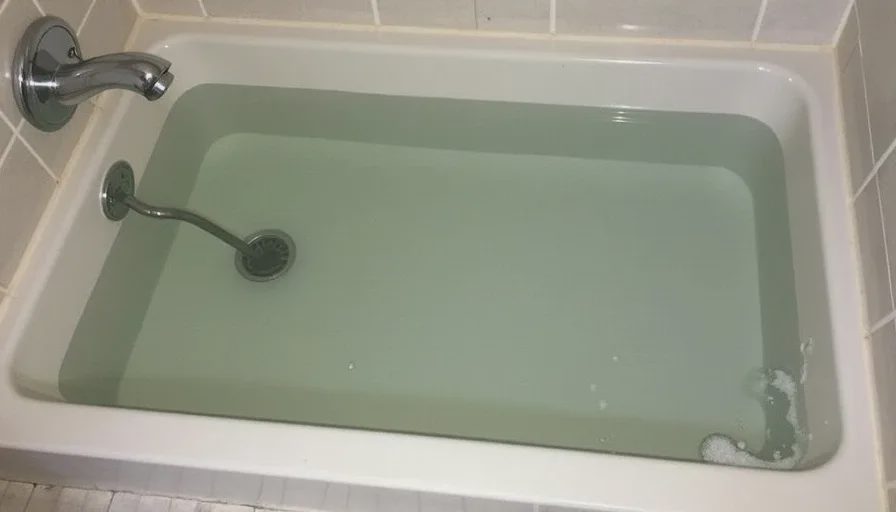
The drain is leak-tested before tile is installed
If the quote does not mention leak-testing, ask why. A contractor who skips the flood test is a contractor who does not want to know if their waterproofing works.
6. Niche and Bench Waterproofing
Shower niches (the recessed shelves in the wall) and benches are popular additions. They are also popular leak points.
If your quote includes a niche or bench, the scope must specify that these are waterproofed as thoroughly as the rest of the shower—including all interior seams and fasteners. They should not be simply tiled over drywall.
7. Warranty and Responsibility
Finally, a complete scope specifies who is responsible for waterproofing performance and what happens if it fails.
Look for:
A statement that the waterproofing system is installed per manufacturer specifications
A statement that the installer is certified or trained by the manufacturer
A warranty on the waterproofing work—separate from the tile warranty
If the quote does not include a warranty, you have no recourse if the waterproofing fails in two years.
What a Complete Waterproofing Scope Looks Like
Here is a simple test: read the waterproofing section of your quote. If it looks like this, it is incomplete:
"Waterproofing: All walls and floors will be waterproofed per manufacturer spec."
That is not a scope. That is a placeholder. It does not tell you what material, what method, or what manufacturer.
Here is what a complete waterproofing scope looks like:
"All shower walls and ceilings to receive Schluter Kerdi membrane applied over drywall. All joints, inside corners, outside corners, and fasteners to be sealed with Schluter Kerdi Band and Kerdi Coll sealant. Shower floor to receive Schluter Kerdi membrane over dry-pack mortar bed, sloped at 1/4 inch per foot to drain. Kerdi membrane to be bonded into drain flange with Schluter Kerdi Drain. All membrane installation per Schluter specifications. Leak test performed for 24 hours prior to tile installation. Niche to be Kerdi-constructed and fully waterproofed."
That is clear. That is verifiable. That is a contractor who knows what they are doing and is willing to put it in writing.
The "Tile Guy" Trap
One of the most common arrangements I see in shower conversions is the "tile guy" who subcontracts the waterproofing to someone else—or skips it entirely.
If your contractor says, "I've been doing tile for 30 years, I know what I'm doing," that is not a waterproofing plan. Experience does not guarantee method. And method is what matters.
A contractor who does not follow manufacturer specifications—and cannot show you the spec sheet—is building a shower that is not warranted by any product manufacturer. That means the manufacturer will not honor their warranty when the waterproofing fails. And neither will the contractor.
Always ask for the waterproofing manufacturer's installation instructions. If your contractor cannot produce them, or cannot explain how their work matches them, that is your early warning signal.
My Rule for Older Homeowners
When you are reviewing a shower conversion quote, ask yourself one question:
Does this quote show me exactly how water will be stopped, drained, and removed?
If the answer is "not exactly," you do not have a complete quote.
Water damage does not show up the day after the tile is installed. It shows up two or three years later. By then, the contractor is gone, the warranty is expired, and the rot is already into your subfloor.
If you want to avoid that, read the waterproofing section of your quote before you sign—not after. Demand details. Demand brands. Demand a leak test.
A contractor who puts waterproofing details in the contract is a contractor who expects the job to last. A contractor who leaves them out is a contractor who expects you to pay twice.