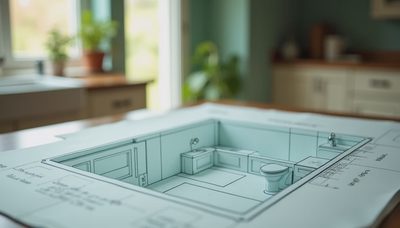
Guest bathroom ideas often begin with a picture: a wider vanity, brighter tile, a quieter exhaust fan, or a shower that is easier to use. The picture is useful, but it is not a remodeling plan. Before you approve a $12,000 to $30,000 project, slow the paper down and confirm exactly what the contractor is promising. A complete job should have a complete scope, including demolition, plumbing, electrical work, ventilation, waterproofing, permits, cleanup, and finish details.
This matters especially in an older home. A contractor may uncover a soft subfloor, outdated wiring, a leaking valve, or framing that does not support the proposed grab bar. Those conditions can justify additional work, but they should not become an excuse for an open-ended contract. If it matters, it should be written.
Turn guest bathroom ideas into a written scope
Start by describing the finished room in ordinary language. List the vanity width, countertop material, sink type, faucet model or allowance, toilet, mirror, lighting, flooring, wall tile, paint, fan, accessories, and door hardware. Include who removes and disposes of the existing fixtures. A phrase such as update bathroom finishes is not enough to price the work fairly.
A useful estimate should separate labor, materials, allowances, and exclusions. For example, a $1,200 tile allowance may sound reasonable until you learn that it covers only the tile, not thinset, grout, edge trim, waterproof membrane, delivery, or installation. Ask whether the allowance includes sales tax and whether unused funds are credited back to you.
Also look for quantities. A bid that says install tile in shower area leaves room for disagreement. A better description identifies wall square footage, tile height, pattern, edge treatment, grout color, and niche or shelf details. The more visual the project, the more important these details become. Two guest bathroom ideas can appear identical online while differing by several thousand dollars in labor and materials.

Check waterproofing before choosing finishes
Tile is not the waterproofing system. It is the visible surface installed over a properly prepared assembly. The contract should identify the shower pan or tub surround system, wall backer, waterproof membrane, seams, corners, curb, drain connection, and flood test. If the estimate simply says waterproof shower, ask what product and installation method are included.
This is where attractive guest bathroom ideas can hide expensive risk. A contractor might propose large-format tile and a frameless glass enclosure but omit the wall preparation needed to support them. Another estimate might include a new shower base but leave the existing drain location as an assumption. Moving a drain can involve access below the floor, patching, framing, and additional plumbing.
Ask when waterproofing will be inspected and photographed before tile covers it. Confirm who is responsible if the substrate is damaged after demolition. The written answer should not be a casual promise from a salesperson. It belongs in the scope, along with any warranty terms and the procedure for reporting a leak.
Review permits, plumbing, and electrical work
A guest bathroom remodel may involve more than replacing fixtures. Moving a toilet, changing a shower valve, adding a receptacle, installing a new fan, or altering lighting can trigger permit requirements depending on local rules. The contract should state whether the contractor or homeowner pulls each permit, schedules inspections, and pays the fees.
Do not accept a vague line such as bring plumbing to code without asking what that means. It could refer to a minor valve replacement, or it could leave you responsible for extensive pipe replacement after the walls open. Ask for a written allowance or a defined change-order process. If the contractor discovers galvanized supply lines, a damaged flange, or an undersized circuit, you need a documented price before approving the added work.
Ventilation deserves particular attention. A new fan should identify its capacity, duct route, exterior termination, switch arrangement, and whether the duct is actually vented outdoors. A powerful fan connected to a blocked or poorly routed duct does not solve moisture problems. These practical details are more important than copying the newest guest bathroom ideas from a showroom.
Compare bids by exclusions, not just totals
Suppose Contractor A offers a $16,800 estimate and Contractor B offers $20,400. The lower number is not automatically the better deal. Read both scopes line by line. One may include demolition, permit fees, primer, trim, a light fixture, and final cleaning, while the other excludes them. The apparent $3,600 savings can disappear through change orders.
Create a simple comparison list with these questions:
- Is demolition and disposal included?
- Are fixtures supplied by the contractor or purchased by the homeowner?
- Are delivery, tax, and installation included for each major item?
- Who repairs drywall, subfloor, framing, and paint after rough-in work?
- Are permits and inspections listed?
- What work is excluded if hidden damage is found?
- Is final cleaning included, and what does that mean?
A reasonable payment schedule also matters. Avoid a large final payment before fixtures are installed, punch-list items are complete, and required inspections have passed. A deposit can cover scheduling and material ordering, but the schedule should connect later payments to visible progress rather than vague dates.

Watch for pressure in the sales process
Some contractors are skilled and honest but still present poorly organized paperwork. Others use pressure to prevent comparison. Be cautious when a salesperson says the price expires tonight, a crew is already nearby, or a special financing rate disappears if you do not sign immediately. Urgency is not proof of value.
Read financing documents separately from the construction contract. A promotional rate, deferred-interest offer, or monthly payment can make a $20,000 project feel manageable while hiding the total repayment amount, lien language, late-payment terms, or a short promotional period. Do not sign blank change-order forms or allow the contractor to substitute materials without written approval.
Ask for the company’s legal name, physical business address, license information where required, proof of general liability insurance, and workers’ compensation coverage. Verify the information independently rather than relying only on a logo or salesperson’s business card. Call references for comparable bathroom projects and ask whether the final cost changed, why it changed, and how disputes were handled.
A safer approval process for your remodel
Before signing, assemble the estimate, drawings or selections, product specifications, payment schedule, warranty language, permit responsibility, and change-order procedure in one folder. Mark every phrase that uses words such as allowance, standard, by owner, as needed, or to be determined. Those terms are not automatically wrong, but each should have a dollar amount, quantity, or decision deadline attached.
Walk through the proposed room with the contractor and ask practical questions. Where will the shutoff valves be located? Will the vanity be scribed to an uneven wall? Who reconnects the toilet after flooring? What happens if the selected faucet is backordered? When can the bathroom be used again? Write the answers into the contract or an attached scope sheet.
Good guest bathroom ideas should improve the room without creating uncertainty about the work. Compare at least two detailed bids, take time to verify the contractor, and do not let a polished rendering substitute for construction documents. If an important promise is missing from the paperwork, treat it as undecided until it is written. That pause can prevent a modest bathroom update from becoming an expensive argument.