Of all the sales pitches I have reviewed, the "safety" proposal is the most emotionally charged. And that is exactly why it is so effective.
The salesperson walks into your home, looks around, and within minutes, they are telling you about the dangers of falling. They show you statistics. They tell you about their own mother or grandmother who fell and broke a hip. They use words like "independence," "dignity," and "peace of mind."
By the time they hand you the proposal, you are not reading a contract. You are reading a lifeline. You are thinking about staying in your home, about not being a burden, about avoiding the nursing home.
And that is when the numbers become hard to question.
I am not here to tell you that bathroom safety upgrades are unnecessary. They are not. Falls are a serious risk for older adults, and a well-designed bathroom can make a meaningful difference in safety and independence.
But I am here to tell you that not every "safety" proposal is designed for your safety. Some are designed for the salesperson's commission. The distinction is not always obvious, but it is always visible in the details—if you know where to look.
Let me walk you through how to read a bathroom safety proposal and spot the difference between a legitimate accessibility upgrade and a sales funnel.
The Three Red Flags in Any "Safety" Proposal
When I review a bathroom safety proposal, I look for three things that distinguish a genuine accessibility scope from a sales-driven one.
Red Flag 1: Fear-Based Language Instead of Function-Based Language
A legitimate proposal describes what the work will do. A sales-driven proposal describes what will happen if you do not do the work.
Look at the language in the proposal:
Sales-Driven Language | Function-Based Language |
|---|---|
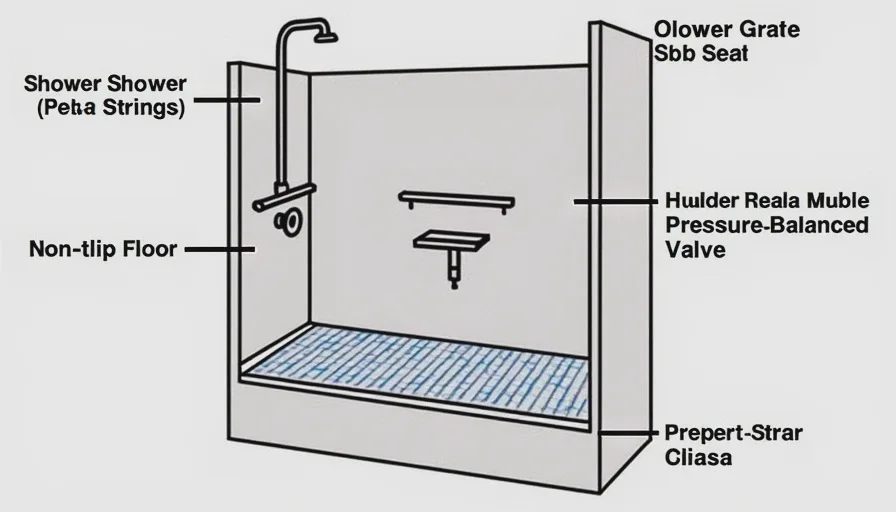
"Prevent a catastrophic fall that could end your independence" | "Install grab bars at shower and toilet to provide stability" |
"Protect yourself from the #1 cause of senior injury" | "Install non-slip flooring in the shower area" |
"This is the most important investment you will ever make" | "Replace shower valve with a pressure-balanced model" |
"Don't become a statistic" | "Provide lever handles for ease of use" |
Legitimate contractors sell solutions. Salespeople sell fear. The proposal that spends more time describing the problem than the solution is not a proposal—it is a sales pitch in document form.
Red Flag 2: Bundled Pricing with No Breakdown
A legitimate scope lists individual items with their costs. A sales-driven proposal bundles everything into one large number—usually with a discount "available only today."
Here is what bundled pricing hides:
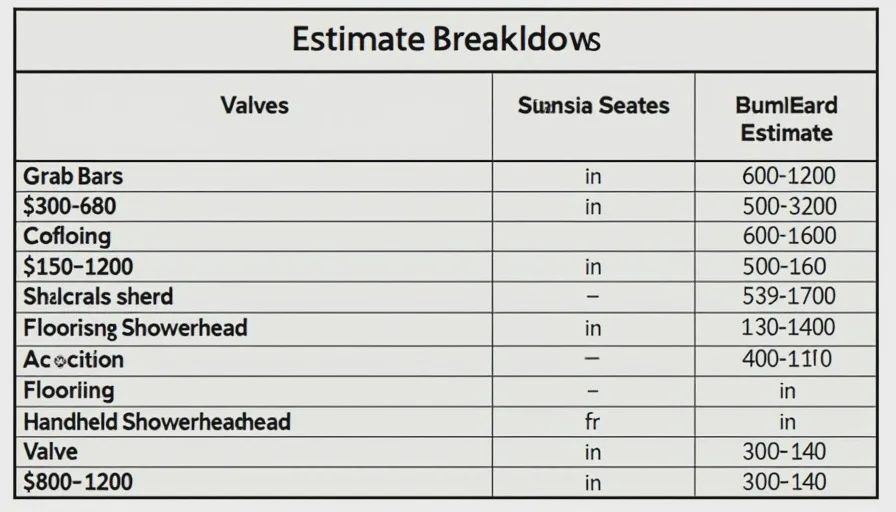
Item | Fair Estimate | What Bundled Pricing Often Includes |
|---|---|---|
Grab bars | $300–$600 installed | 2–4× markup |
Shower seat | $800–$1,200 | Not specified |
Non-slip flooring | $1,500–$3,000 | Material not specified |
Handheld showerhead | $200–$400 | Brand not specified |
Valve replacement | $800–$1,200 | Not specified |
Total | $3,600–$6,400 | $12,000–$18,000 |
The bundled number is not a price. It is a starting point for negotiation. The salesperson knows you have no way to compare it to anything else because you do not know what is inside it.
Red Flag 3: A "Today Only" Discount
This is the oldest trick in the book, but it works every time.
The salesperson presents a proposal for $18,000. Then they "call their manager." They pretend to fight for you. They come back with a "one-time" discount of $4,000—but only if you sign right now.
A legitimate contractor does not have a price that changes based on how fast you sign. They have a price that reflects the cost of the work, their overhead, and a reasonable profit. That price is stable. It does not evaporate at midnight.
If the price expires, the proposal is not a proposal. It is a trap.
What a Genuine Accessibility Scope Looks Like
A legitimate bathroom accessibility scope is detailed, specific, and functional. It does not sell fear. It sells solutions. Here is what it looks like.
1. Grab Bars and Handrails
A complete scope specifies:
The location of each grab bar (e.g., at the shower entry, inside the shower, beside the toilet)
The height and angle (typically 33–36 inches for ADA compliance, horizontal for most uses)
The mounting method (blocking in the wall or toggle bolts into studs)
The material (stainless steel, aluminum, or brass with a non-slip finish)
The weight rating (minimum 300 pounds)
If the proposal says "grab bars installed as needed," that is not a scope. That is a blank check.
2. Shower or Tub Modifications
A complete scope specifies:
The type of modification (curbless shower, walk-in tub, shower seat, etc.)
The waterproofing system (with manufacturer and product name)
The floor slope (1/4 inch per foot for drainage)
The shower valve (pressure-balanced or thermostatic, with a brand and model)
The showerhead (handheld with a 6-foot hose, brand and model)
If the proposal says "walk-in shower conversion" with no details, you have no idea what you are getting.
3. Flooring and Non-Slip Surfaces
A complete scope specifies:
The type of flooring (porcelain tile, LVT, or rubber)
The coefficient of friction (COF) rating (minimum 0.6 in wet conditions)
The backing material and installation method
The transition strips or height changes at doorways
If the proposal says "non-slip flooring" with no COF rating, the contractor has chosen the cheapest option.
4. Lighting and Visibility
A complete scope specifies:
The type of lighting (ceiling, vanity, or wall-mounted)
The color temperature (3000K–4000K)
The placement (to avoid shadows on the face)
Dimmer or motion sensor options
If the proposal does not mention lighting, it is not a complete bathroom safety plan. Good lighting is one of the most effective fall prevention tools.
5. Emergency Access
A complete scope specifies:
Whether the bathroom door opens outward (or a pocket door)
Whether there is a clear path from the bathroom to the outside
Whether an emergency pull-cord or alarm is installed
If the proposal does not address emergency access, you are not prepared for the one scenario where safety matters most.
The "Bathroom Safety Package" Trap
Many contractors and sales organizations offer a "Bathroom Safety Package." It is a bundled set of upgrades priced at a single, often discounted, amount. And I want you to be very careful with it.
The word "package" is a marketing term. It means the contractor has bundled together a set of products and services that they sell at a fixed price. The problem is that the package is often designed to maximize profit, not safety.
Here is how the package trap works:
The package includes items you did not ask for—items that are high-margin but low-value, like decorative trim or a special coating.
The package excludes items you really need—like a pressure-balanced valve or an access panel for maintenance.
The package uses low-quality materials—the cheapest grab bars, the thinnest tile, the lowest-grade waterproofing.
The package is not itemized, so you cannot see which part of the price is material vs. labor vs. overhead.
I recommend avoiding any proposal that is sold as a "package." Instead, ask for an itemized scope. You want to see every grab bar, every tile, every valve, and every labor hour listed separately. Then you can decide what matters to you.
The Contractor vs. The Sales Organization
Here is one more distinction that matters.
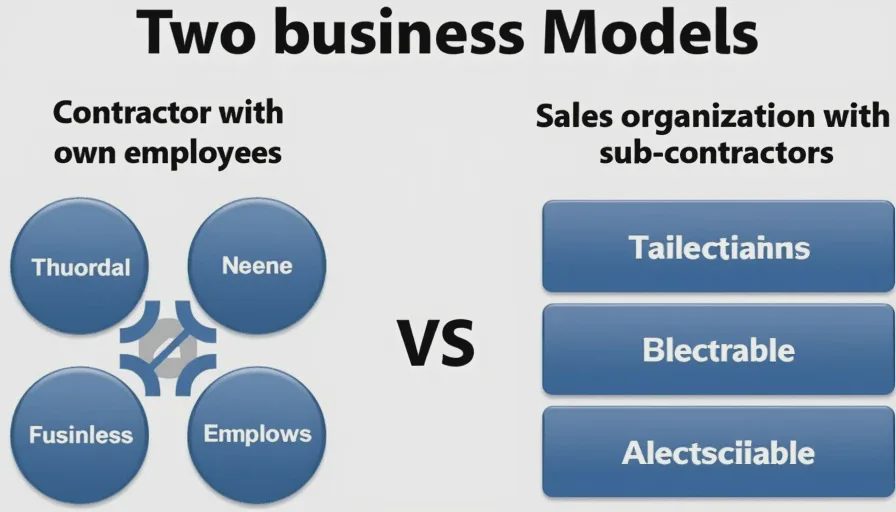
Some companies are contractors—they do the work. They employ plumbers, tilers, and electricians. Their estimate is based on labor and materials.
Other companies are sales organizations—they sell the job, then subcontract the work to the lowest bidder. Their estimate is based on a commission structure, not on the cost of the work.
How do you tell the difference?
Ask this question: "Who is going to do the work? Your employees, or subcontractors?"
If they say "we have a team of certified installers," ask for proof. Ask for their names and their license numbers. If they cannot provide them, they are a sales organization.
A sales organization can still deliver a good job. But you are paying a premium for their commission and overhead. And the quality of the work depends on the subcontractor they choose, not on the skill of the company.
My Rule for Older Homeowners
When you are reading a bathroom safety proposal, remember this:
Safety is not a feeling. It is a function.
A genuine accessibility upgrade solves a specific set of problems—reducing fall risk, improving access, making daily tasks easier. It does not sell fear. It sells solutions.
If the proposal is vague, bundled, and expiring, it is a sales funnel. If the proposal is specific, itemized, and stable, it is a legitimate scope. And only a legitimate scope deserves your signature.
Slow the paper down. Read the details. Ask the questions. And never sign a proposal that sells your fear instead of your safety.