Almost every large home improvement quote in 2026 comes with a financing option attached. HVAC, roofing, windows, siding, solar, and the big kitchen and bath remodelers all partner with lenders to offer payment plans. The pitch is almost always the same: "12 months no interest!" or "$0 down, $199 a month."
Sometimes it is a good deal. More often, it costs you more than you realize.
I have reviewed dozens of contracts where the financing was the most expensive part of the project—not because the interest rate was high, but because the costs were hidden in the price, the fine print, or both. And older homeowners are especially vulnerable, because they often have significant home equity, they may be on fixed incomes, and they are more likely to trust a contractor who offers a convenient payment plan.
Here is what you need to know before you sign a financing agreement through your contractor.
Why Contractors Push Their Own Financing
A contractor who offers financing is not doing you a favor. They are doing business.
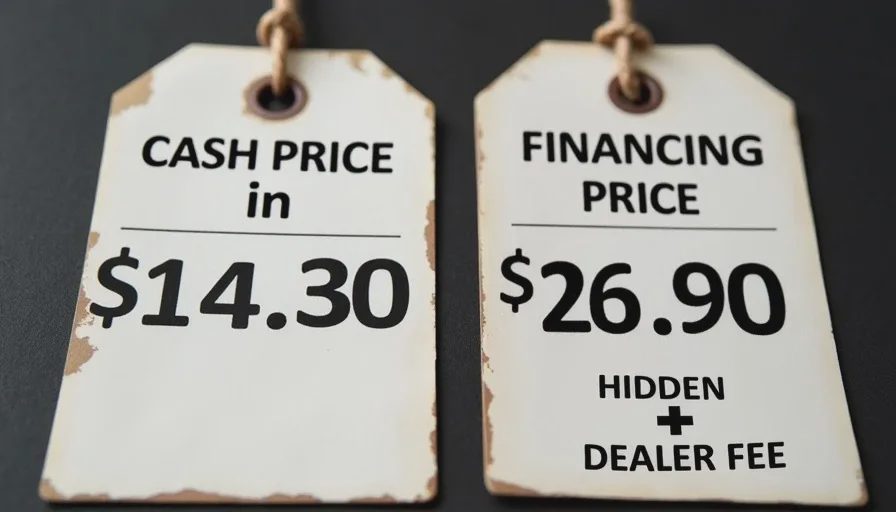
When a contractor partners with a lender, they receive a dealer fee—a percentage of the loan amount that the lender pays them for originating the loan. That fee can range from a few percent on standard loans to 12% or more on promotional 0% APR plans.
Here is the catch: the contractor almost always bakes that dealer fee into the price they quote you. You are paying for the convenience of financing—whether you realize it or not.
And there is a second reason contractors push financing: it removes price resistance. A $20,000 bathroom remodel sounds expensive. But $199 a month for 10 years? That sounds manageable. The contractor knows that financing makes the project feel affordable, even when the total cost is much higher than it should be.
The Single Most Important Question to Ask
Before you sign any financing agreement, ask this one question:
"What is the cash price for this job?"
That is the single most important question you can ask before signing a financing offer. The cash price is the baseline. It is what the job actually costs. Everything above that is the cost of financing.
If the contractor hesitates, or says "the price is the same either way," they are not being honest. The dealer fee has to be paid by someone. If it is not showing up as a separate line item, it is baked into the price—and you are paying it.
A contractor who is transparent about financing will tell you the cash price, show you the financing price, and let you decide which one works for you. A contractor who hides the difference is a contractor who is counting on you not to ask.
The Dealer Fee: What It Is and Why It Matters
The dealer fee is the single biggest hidden cost in contractor financing.
Here is how it works: a lender offers a promotional rate—say, 0% APR for 12 months. But that rate is not free. The lender charges the contractor a dealer fee to offer it. That fee is typically 8% to 15% of the loan amount for 0% APR promos. The contractor then adds that fee to the price they quote you.
The result: you pay a higher price for the same job, and the contractor gets paid either way.
Regulatory findings have shown that some lenders "cram" markup fees into home improvement loans, raising total cost 30% or more above the cash price. In one enforcement action, a financing company and its contractors hid more than $22 million in financing costs inside the price of systems without disclosing them as finance charges.
That is not an accident. It is a business model.
The Deferred Interest Trap
The "0% for 12 months" offer is one of the most common financing pitches. It is also one of the most dangerous.
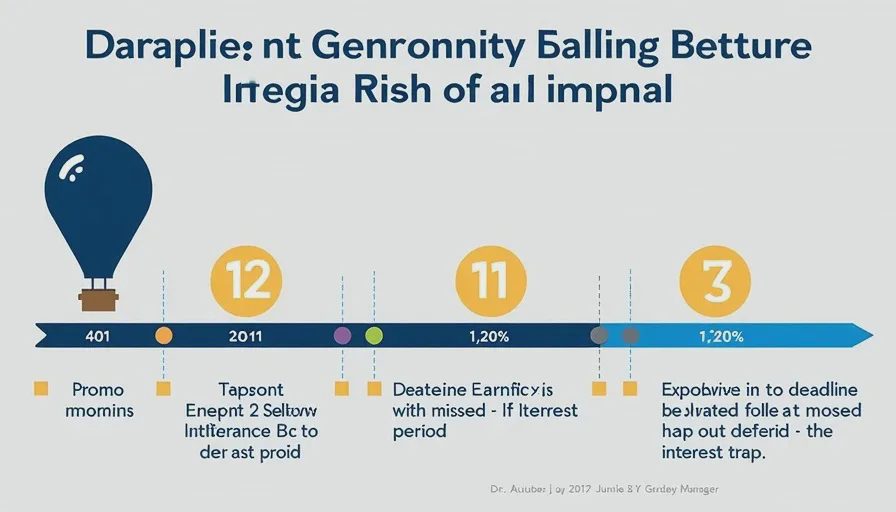
Most 0% APR promotions are structured as deferred interest. Here is how it works:
You have 12 months to pay off the balance.
If you pay it off in full by the deadline, you pay no interest.
If you miss the deadline by even one day—or if you are short by even one dollar—you owe all the interest that would have accrued from day one.
The minimum payments the lender sets are often not enough to clear the balance within the promo period. You think you are on track, but you are actually falling behind. And when the promo period ends, you are hit with a massive interest bill.
One homeowner filed a complaint after a roofing contractor's financing caused their loan payment to jump unexpectedly because they "failed to apply a tax credit to the loan principal"—something the salesperson had told them they did not need to worry about.
Some contractor loans use waived-interest structures instead. Interest does not accrue during the promo period, and you just owe the remaining principal afterward. Those are safer—but less common.
Ask the lender: is this deferred interest or waived interest? If they cannot answer, or if the answer is deferred interest, be very careful.
The PACE Loan Trap
PACE (Property Assessed Clean Energy) loans are a specific type of contractor financing that carries unique risks.
PACE loans are repaid through your property taxes. That means if you fall behind, you are not just delinquent on a loan—you are delinquent on your taxes. And that can lead to a tax sale, where you could lose your home.
Here are the risks that consumer protection agencies warn about:
Unaffordable payments: PACE loans can last 5, 10, or 20 years, adding significant amounts to your property tax bill.
Trouble selling or refinancing: Most lenders will not refinance a mortgage or give a new mortgage if there is an outstanding PACE loan. That means you cannot sell your home until the loan is paid off—or the buyer must assume the payments, which makes your home less attractive.
Limited dispute rights: Because PACE loans are paid through property taxes, you have limited options if you are not satisfied with the work. You cannot withhold payment for poor workmanship.
Consumer protection agencies have taken action against PACE financing companies for deceptive practices. In one case, a PACE lender and its contractors falsely told homeowners that the financing would not interfere with the sale or refinancing of their homes. In many instances, contractors used high-pressure sales tactics or even forgery to sign consumers up, resulting in liens being recorded without the homeowner's informed consent. The company agreed to pay millions to provide relief to affected consumers.
If a contractor offers you a PACE loan, read the disclosure carefully. Ask if there are other financing options. And never sign a PACE loan without understanding that it attaches to your property tax bill—and your home.
The Reverse Mortgage Trap
Some contractors target older homeowners specifically with reverse mortgage financing.
A reverse mortgage (Home Equity Conversion Mortgage, or HECM) allows homeowners aged 62 and older to borrow against their home equity. It can be a legitimate financial tool. But fraudsters target older adults, hoping they have high home equity and are not familiar with how reverse mortgages work.
Here is how the scam works: an unsolicited contractor approaches a homeowner about "urgently needed" repairs. They provide an inflated repair estimate, pressure the homeowner into applying for a reverse mortgage, and then take the loan proceeds—sometimes without ever completing the work.
In one high-profile case, a contractor orchestrated a scheme targeting elderly homeowners. He duped victims into applying for reverse mortgages, sometimes falsely promising the work was government-funded. In other cases, he convinced homeowners to sign over their entire loan proceeds—and then never performed the work. At least 110 victims suffered significant financial hardship. The contractor pocketed more than $6 million in victim loan proceeds. He was eventually sentenced to over 17 years in prison and ordered to pay millions in restitution.
Industry associations warn seniors to:
Be skeptical of unsolicited offers for urgent repairs using your home equity
Never meet with a contractor alone
Have a trusted loved one or attorney review all documents before signing
Never sign over or allow anyone to directly take your loan proceeds
Do not rush into a reverse mortgage—consult with a government-approved housing counselor first
What to Look for in a Financing Contract
If you are considering contractor financing, read the financing contract—not just the contractor's proposal. Here is what to check:
1. The APR (Annual Percentage Rate)
The Truth in Lending Act requires lenders to prominently state the APR. That is the actual cost of the loan, including interest and fees. Compare it to other options.
2. The Dealer Fee
Ask the contractor: is there a dealer fee, and is it included in the price? If they cannot answer, or if they say "it's included" without telling you the amount, you are overpaying.
3. Deferred Interest vs. Waived Interest
Ask the lender: is this deferred interest or waived interest? If it is deferred, understand that missing the deadline means paying retroactive interest.
4. Prepayment Penalties
Some loans charge a fee if you pay them off early. Most contractor loans do not, but check. If there is a prepayment penalty, factor that into your decision.
5. The Total Cost
Do not compare monthly payments. Compare the total cost of the loan over its full term. A lower monthly payment often means a longer term and more total interest.
6. The Cancellation Clause
Federal law gives you a three-day cooling-off period for door-to-door sales. But if you signed the financing agreement in the contractor's office, that may not apply. Read the cancellation clause carefully.
The Safer Alternatives
For projects over $15,000 to $20,000, a home equity line of credit (HELOC), a home equity loan, or a personal loan from your bank or credit union is usually cheaper than contractor financing.
Here is why:
Lower fees: Banks and credit unions do not charge dealer fees.
Transparent terms: The APR, fees, and repayment terms are disclosed upfront.
No pressure: You are not signing in a contractor's kitchen, with a salesperson waiting for your signature.
If you have equity in your home, talk to your bank or credit union before you sign anything with a contractor. Compare the total cost. You may save thousands.
My Rule for Older Homeowners
When a contractor offers you financing, remember this:
The financing is not a favor. It is a product. And products have prices.
Ask for the cash price. Ask about the dealer fee. Ask if the interest is deferred or waived. Read the financing contract as carefully as you read the construction contract. And never, ever sign a financing agreement on the same day you hear the pitch.
A contractor who is honest about financing will answer your questions without hesitation. A contractor who rushes you or hides the costs is a contractor who is making money off your financing—and that is not the kind of contractor you want in your home.