
In the last two kitchen articles, I walked you through why kitchen remodels generate expensive surprises after demolition, and then what to look for in a kitchen contract before the first cabinet is ordered.
Now let me show you where even a well-written contract can still blow up your budget: the allowance section.
An allowance is a placeholder amount in a contract for items that are not yet selected. Cabinets, countertops, tile, fixtures, appliances—if you have not picked them out at the time of signing, the contractor puts a dollar figure in the contract as a best guess.
And that is where the trouble starts.
I have reviewed kitchen budgets where allowances were the single largest source of cost overruns. Not because the work was poorly done, and not because the contractor was dishonest, but because the allowances were set unrealistically low—and the homeowner did not realize it until they were already committed.
This article is about how allowances work, why they are almost always too low, and what you can do to protect yourself before you sign.
What an Allowance Actually Is (and Is Not)
An allowance is a number in your contract that says: "We are budgeting this much for this item. If you choose something that costs more, you pay the difference. If you choose something that costs less, you get a credit."
That sounds fair. And in principle, it is.
But in practice, allowances are almost never set at a realistic level. They are set at the lowest possible level to make the total contract price look attractive.
Here is what happens: you get a quote for $40,000. You compare it to two other quotes and it looks reasonable. You sign the contract. Then you start selecting materials, and you discover that the "allowance" for your countertops is $800—and the countertops you actually want cost $3,200. The contractor says, "No problem, we'll just upgrade you—that will be an additional $2,400."
You have not changed your mind. You have not asked for anything extra. You are just selecting what you thought you were getting in the first place. And now you are paying more.
The allowance was not a budget. It was a lowball. And you are the one who pays for it.
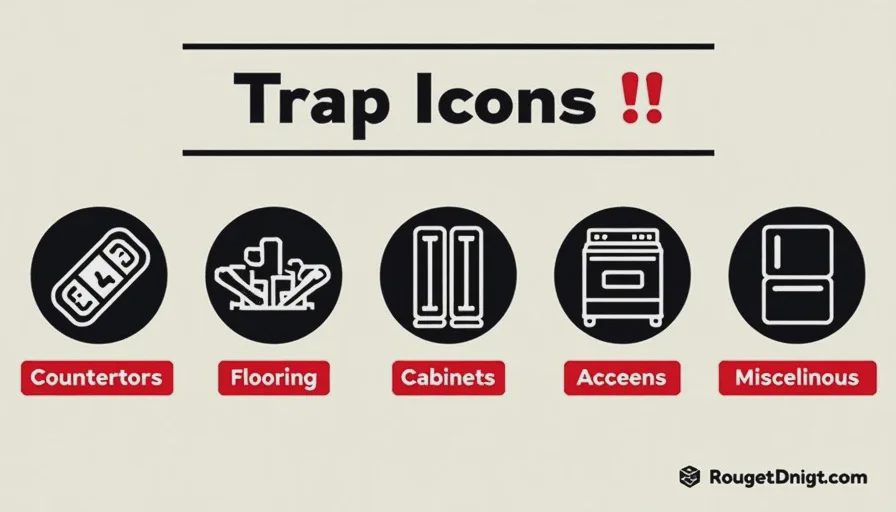
The Five Most Common Allowance Traps
1. The Unrealistic Countertop Allowance
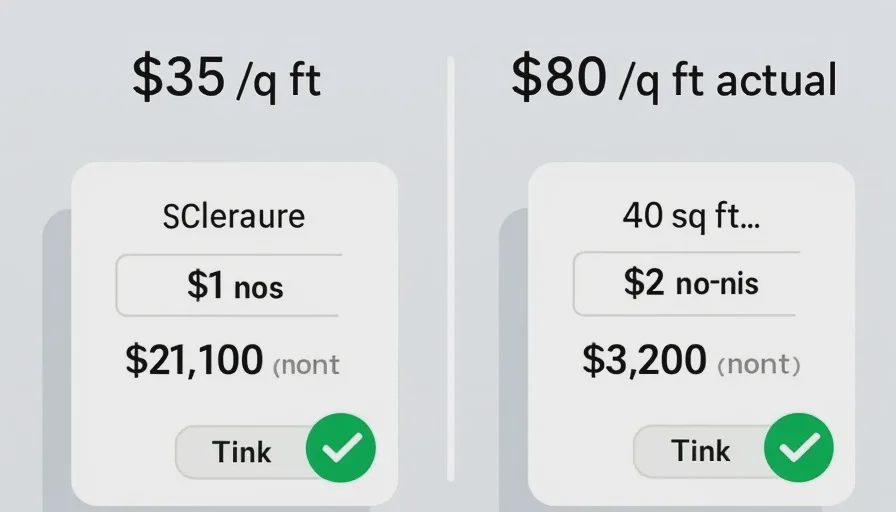
Countertops are one of the most common allowance traps. A contractor may set the allowance at $30 to $40 per square foot—enough for laminate or basic tile. But if you want quartz, granite, or solid surface, the actual cost is $60 to $120 per square foot.
For a 40-square-foot kitchen, the difference is:
Allowance: 40 sq ft × $35 = $1,400
Actual: 40 sq ft × $80 = $3,200
Overrun: $1,800
That is not an upgrade. That is just the market price for what most homeowners expect.
What to look for: If the countertop allowance is not tied to a specific product, it is too low. The contract should name a specific material, color, and supplier. "Quartz countertops, 3cm, from supplier X, series Y" is a specification. "$1,500 allowance for countertops" is a guess.
2. The Incomplete Flooring Allowance
Flooring allowances are often set based on the cost of basic tile or vinyl—not including the cost of leveling the subfloor, moving furniture, or demolition of the old floor.
One homeowner I reviewed had a flooring allowance of $2,000 for a 200-square-foot kitchen. The actual cost of the tile they selected was $3,200, plus $800 for subfloor leveling and $400 for removal and disposal. The total was $4,400—more than double the allowance.
What to look for: Does the allowance include materials only, or does it include labor and prep work? Get a breakdown.
3. The "Builder-Grade" Cabinet Allowance
Cabinet allowances are often based on "builder-grade" products—particleboard boxes, basic hardware, standard finishes. The cabinets you want are likely a step up from that.
A builder-grade cabinet might cost $150 per linear foot. A semi-custom cabinet costs $300 to $500 per linear foot. For a 20-foot kitchen, the difference is $3,000 to $7,000.
What to look for: Does the allowance specify the manufacturer, series, construction, and finish? If it just says "custom cabinets," there is no way to compare it to anything real.
4. The Hidden Appliance Allowance
Appliances are another source of allowance problems. The contractor may set the allowance at $3,000 for a refrigerator, range, dishwasher, and microwave. That is enough for basic models from mainstream brands. But if you want stainless steel, French doors, convection, or smart features, the cost quickly jumps to $6,000 or more.
What to look for: The allowance should list specific makes and models. If it does not, the allowance is a placeholder—and placeholders are where overruns happen.
5. The "Miscellaneous" Allowance
Some contracts include a "miscellaneous" allowance for things like trim, hardware, or lighting. That is a red flag by itself. If the contractor cannot specify what the allowance covers, they are planning to use it as a slush fund.
What to look for: Any allowance that is not tied to a specific product or service. If it is not specified, it is not real.
Why Allowances Are Not in the Homeowner's Interest
Let me be direct: allowances are not designed to protect you. They are designed to protect the contractor's ability to offer a low price.
Here is the contractor's logic:
Set the allowance low enough to keep the total quote competitive.
Get the contract signed.
When the homeowner picks out materials, they are already committed. They have paid the deposit, demolished the kitchen, and started the work. It is too late to shop around.
Charge the homeowner the difference—which is now a "change order" with a markup.
That is not fraud. It is a business strategy. And it works because homeowners do not understand what the allowance really means.
The way to protect yourself is to stop treating allowances as "budget placeholders" and start treating them as the starting point for negotiations.
How to Protect Yourself from Allowance Overruns
Here is a simple four-step process I recommend to every homeowner reviewing a kitchen contract.
Step 1: Before You Sign, Pick Your Materials
Do not wait until after you have signed the contract to start selecting materials. Pick your countertops, cabinets, flooring, tile, and appliances before you sign. Get the make, model, color, and supplier in writing.
If the contractor says, "We can't give you a firm price until the materials are selected," that is a sign. A good contractor will walk you through the selection process as part of the estimating phase. If they are rushing you to sign before you have picked your materials, they are hoping you will choose expensive upgrades later.
Step 2: Ask for a "Not-to-Exceed" Allowance
If you cannot pick materials before signing, ask the contractor to guarantee that the allowance is sufficient to purchase what you want. That is a "not-to-exceed" clause—meaning the contractor agrees that the allowance is high enough to cover your selections.
A contractor who says "we'll make it work" is not giving you a guarantee. A contractor who gives you a "not-to-exceed" number is giving you a real budget.
Step 3: Ask for the Supplier's Name and Pricing
Do not just accept the allowance number. Ask the contractor for the name of the supplier they will use, and ask to see the supplier's pricing. If the contractor refuses, you are being set up for a markup.
If the contractor says "we have special pricing with our suppliers," ask what that pricing is. If they cannot tell you, there is no discount—and the allowance is just a number.
Step 4: Get It in Writing
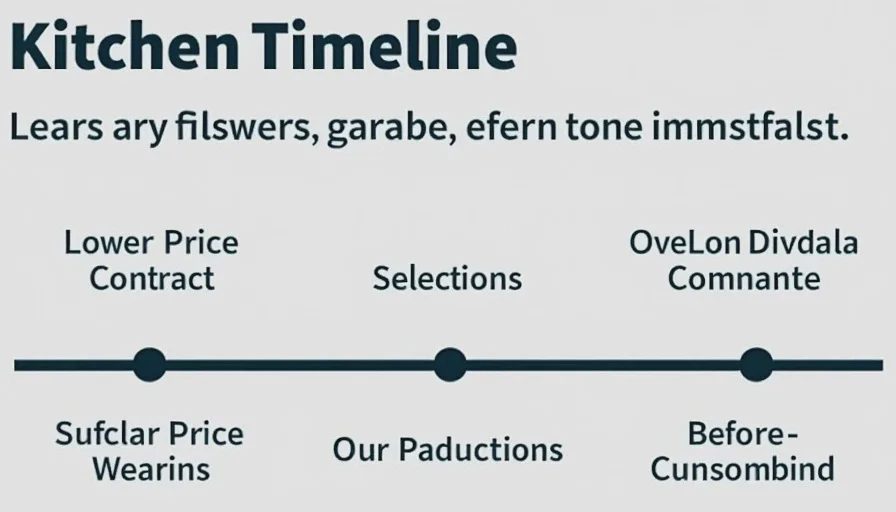
Every allowance should be listed in the contract with:
The dollar amount
The item it covers
The supplier or manufacturer
The product line or series
The process for handling overruns and credits
If the contract only says "allowance: $X" without the rest, it is not a commitment. It is a placeholder. And placeholders are where budget blowouts begin.
The Allowance Overrun Conversation
Here is a script you can use with your contractor before you sign:
"I am planning to select [countertops, cabinets, flooring] from [supplier]. I want to make sure the allowances in this contract are realistic. Can you confirm that the allowance for each item is sufficient to cover the selections I have in mind? I would like to see the pricing and get a not-to-exceed commitment."
If they say yes and provide the documentation, you are in good hands. If they say no or try to dodge the question, you need to pause.
A contractor who is honest about allowances will work with you to set realistic numbers. A contractor who avoids the conversation is counting on you to overpay later.
My Rule for Older Homeowners
Here is my rule for allowances:
An allowance is not a budget. It is a lowball until proven otherwise.
Before you sign a kitchen contract, verify every allowance. Pick your materials in advance, get a not-to-exceed commitment, and ask for supplier pricing. If the contractor cannot or will not provide that information, the allowances are too low—and you will be the one paying for it.
Your budget should be based on what you actually want, not what the contractor wants to show you on the first page of the quote. And that means you need to do the work before you sign, not after.