
If you are planning a lavender bed, the phrase well drained soil for lavender is more than gardening advice. It is the main condition that determines whether the plant develops sturdy stems and fragrant blooms or slowly declines with yellowing leaves and soft roots. Lavender comes from dry, rocky regions, so it handles poor soil better than it handles constant moisture. A simple soil check before planting can prevent years of weak growth.
What Lavender Actually Needs From Soil
Lavender needs soil that lets water move away from its roots quickly after rain or irrigation. The ideal planting mix is loose, gritty, and moderately low in fertility. A pH between about 6.5 and 8 is generally suitable, although many garden soils fall comfortably within that range without adjustment.
Heavy clay creates the most common problem. Clay particles pack tightly, leaving little air space around the roots. After a storm, the surface may look dry while the lower root zone remains saturated. Lavender planted in that condition can suffer root rot, especially during a wet winter. Dense, rich compost can create a similar problem when it is added in large quantities to an already damp bed.
Sandy soil drains more readily, but extremely loose sand may not hold enough moisture during hot weather. The goal is not soil that dries instantly. The goal is soil that accepts water, allows excess water to leave, and retains just enough moisture for the plant to use between waterings.
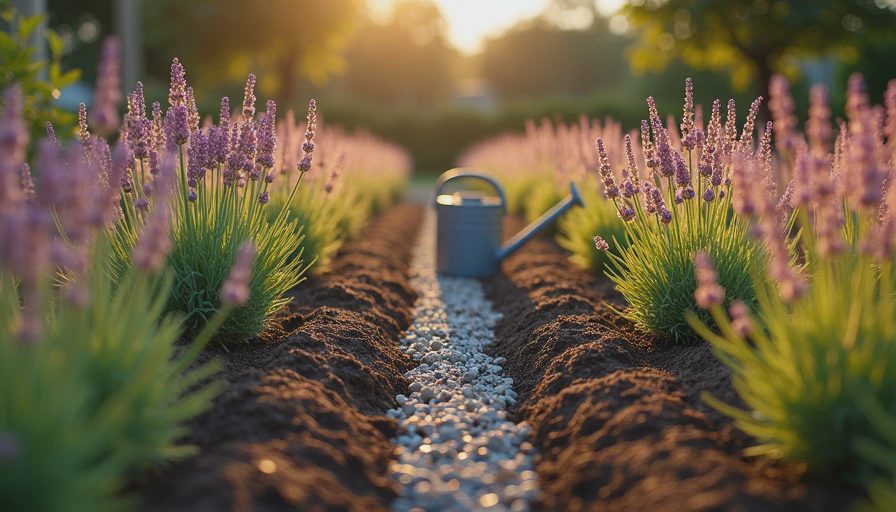
A raised planting position often helps. A gentle mound, rock garden, or elevated bed can improve drainage without requiring a complete replacement of the existing soil. In a flat yard, even raising the root zone by 6 to 12 inches can make a meaningful difference.
How to Test Drainage Before You Plant
Do not rely only on the soil’s appearance. A dark, crumbly surface can cover compacted soil underneath. The easiest home test requires a shovel, a hose, and a little patience.
Dig a hole about 12 inches deep and 12 inches wide where the lavender will grow. Fill it with water and let the hole drain completely. Then fill it again and measure how much the water level drops over an hour. If the water remains nearly unchanged, the site is poorly drained and needs correction before planting. If several inches disappear during the hour, the site is more promising.
Also inspect the hole’s sides. If the shovel has created smooth, shiny walls, the soil may be compacted. Break up those surfaces with a garden fork rather than simply pouring in more compost. Look for buried construction debris, hardpan, or a dense layer below the topsoil. These hidden layers can hold water even when the surface seems workable.
Watch the site after an ordinary rain. Puddles that remain into the next day are a warning. Lavender does not need a constantly wet root zone, and no fertilizer can compensate for a planting location that stays saturated.
Building Well Drained Soil for Lavender
The best amendment plan depends on what is already in the bed. For average garden soil, mix in coarse mineral material such as horticultural grit, pumice, or small gravel along with a modest amount of finished compost. These materials create larger air spaces and improve the texture around the roots.
Avoid using fine play sand as the main fix for clay. Fine sand can fill the spaces between clay particles and produce a dense, concrete-like mixture. Coarse builder’s sand, pumice, or expanded shale is usually more useful, but the amendment must be mixed through the root zone rather than spread as a thin layer on top.
For a small bed, loosen the soil 12 to 18 inches deep. Work amendments through the entire planting area so water does not stop abruptly at a boundary between amended soil and compacted soil. A sharp transition can create a basin that collects water around the roots.
Well drained soil for lavender should not be loaded with manure or high-nitrogen fertilizer. Excess fertility can produce soft, leafy growth with fewer flowers. A basic soil test can identify serious pH or nutrient problems, but drainage and structure deserve attention first.
When the native ground is extremely wet, use a raised bed or large container. Choose a container with several open drainage holes, and never place it in a saucer that stays full after watering. A commercial cactus or Mediterranean plant mix can work, but inspect the ingredients. Some mixes labeled for containers contain large amounts of moisture-retaining peat or compost and may need additional pumice or grit.
Planting and Watering Without Creating Problems
Plant lavender slightly high rather than burying the crown. The crown is the point where the stems meet the roots, and covering it with wet soil can encourage decay. Set the plant so the top of the root ball sits level with or slightly above the surrounding soil. Forming a shallow mound around the plant can help rain move away from the crown.
Water deeply when planting, then allow the soil to dry before watering again. Frequent shallow watering keeps the upper layer wet and encourages weak surface roots. During the first growing season, check the soil with your finger several inches down. Water when the root zone is dry, not simply because the calendar says it is time.
Established lavender usually needs less supplemental water than nearby annual flowers. Drip irrigation or a slow hose at the base is better than a sprinkler that repeatedly wets the foliage. Water early in the day so any moisture on the leaves can dry quickly.
Mulch requires care. A thick layer of fine bark or compost can hold moisture against the crown. If you use mulch, keep it several inches away from the stems and choose a coarse, mineral mulch such as gravel in areas with heavy rainfall. Gravel also reflects heat and keeps the plant’s base more open to air.
Common Soil Fixes That Fail
One frequent mistake is digging a small hole in bad soil and filling it with a perfect planting mix. The hole can act like a bowl, collecting water from the surrounding clay. Improve a broad area or build the planting position above grade instead.
Another mistake is adding fertilizer because the plant looks pale. Pale leaves can result from wet roots, cold conditions, or poor drainage. Extra nitrogen may create foliage without solving the underlying problem. Remove damaged growth, reduce watering, and inspect the roots if the decline continues.
Do not assume a layer of rocks at the bottom of a pot improves drainage. In many containers, that layer reduces the usable soil depth and can keep water perched above it. An open drainage hole and a suitable mix are more important.
Well drained soil for lavender also does not mean completely dry soil at every moment. A plant that wilts daily in hot weather may need a deeper root zone, a larger container, or a better watering schedule. Good drainage and reasonable moisture retention must work together.
A Simple Pre-Planting Review
Before buying several plants, review the location as if you were checking a contractor’s scope. Identify the soil type, measure how long test water takes to disappear, and note where roof runoff or downspouts send water. Confirm that the bed receives at least six hours of direct sun for strong flowering.
Prepare the bed before the lavender arrives. Loosen compacted soil, mix amendments evenly, and shape the surface so water cannot collect around the crown. If the site still stays wet, move the plants to a mound, raised bed, or container instead of hoping the condition improves.
Choose a variety suited to your climate, leave enough space for mature growth, and avoid crowding plants against walls or dense shrubs. Air movement matters in humid regions because crowded foliage dries slowly.
Well drained soil for lavender is not a special product you must buy in a bag. It is a combination of proper grading, open soil structure, controlled watering, and sensible planting depth. Do the drainage test first, write down what you find, and correct the site before spending money on a full row of plants. A careful setup usually costs less than replacing lavender that failed in a wet bed.