
Low maintenance bubbling urn fountains can add moving water to a patio, entry path, or small garden without the excavation required for a large pond. But the phrase is not a complete specification. It does not tell you whether the urn is ceramic, concrete, fiberglass, or resin; whether the pump is included; or who handles electrical work, drainage, winterization, and repairs. Before you accept a contractor's estimate, slow the paper down and make the actual scope visible.
A small fountain project often looks simple in a showroom. The installer places a vessel, adds a pump, fills the basin, and plugs in the equipment. In practice, an outdoor water feature can involve a compact reservoir, a GFCI-protected electrical outlet, a level base, tubing, gravel, sealant, and a way to remove or replace water. Missing one of those details can turn a $1,500 installation into a series of change orders.
What “low maintenance” should mean in writing
A contractor should explain the maintenance routine rather than using low maintenance as a sales adjective. Ask how often the basin must be refilled, whether leaves collect around the pump, how the pump is removed for cleaning, and what happens if mineral deposits clog the bubbling outlet. A realistic answer might involve weekly water checks during hot weather, occasional pump cleaning, and seasonal draining. That is manageable. It is not maintenance-free.
For low maintenance bubbling urn fountains, the quote should identify the water capacity, pump flow rate, access point, and replacement-pump plan. If the pump is hidden under decorative stone, the scope should say how that stone is removed and replaced. If the feature uses an underground reservoir, the proposal should describe the reservoir dimensions and cover. “Install fountain and rock” is not enough detail for a complete job.
Also ask whether the vessel is designed for outdoor exposure in your climate. A porous clay urn can absorb water and suffer freeze damage, while a resin model may be lighter but more vulnerable to movement or fading. Concrete needs a stable base and may require sealing. The material, finish, dimensions, color, manufacturer, and model number belong in the contract or an attached product sheet.
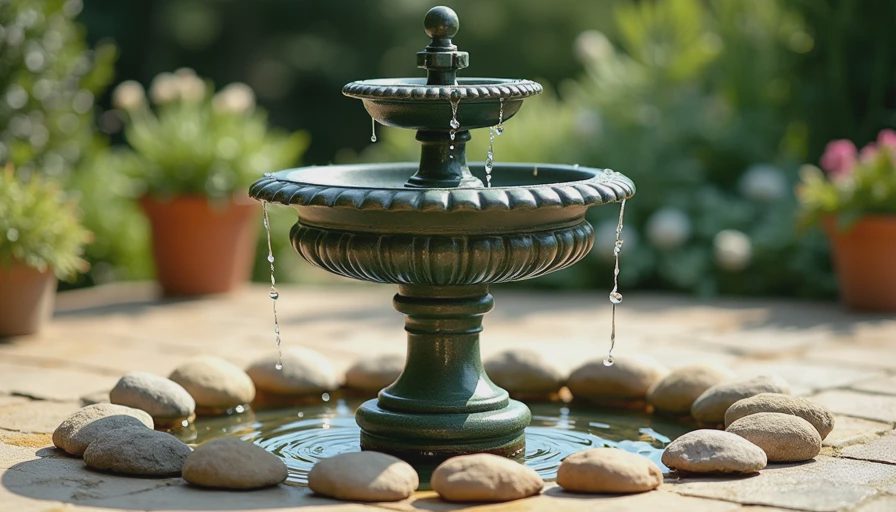
Check the base, drainage, and electrical work
Water weighs more than many homeowners expect. A fountain holding 30 gallons contains roughly 250 pounds of water before the vessel, gravel, pump, and reservoir are added. The installation area must be level and able to support that load without settling. A quote should state whether the contractor will remove sod, excavate, add compacted aggregate, pour a concrete pad, or install pavers over a prepared base.
Drainage deserves equal attention. Splashing water can stain masonry, soften adjacent soil, or run toward a foundation. The proposal should identify the finished location, the expected splash zone, and the method used to keep water away from the house. If an existing patio slopes toward the foundation, the fountain may need a different location or a small drainage adjustment. Do not accept a vague promise that the contractor will “make it work.”
Electrical responsibility must be equally clear. Outdoor pumps should be connected to a properly installed, weather-resistant, GFCI-protected receptacle. The contract should say whether a licensed electrician is included, whether trenching is needed, and who obtains any required permit. A low-voltage pump and a standard plug-in pump are not interchangeable assumptions. If the estimate excludes electrical work, get a separate written price before signing the fountain contract.
Compare the estimate line by line
A reasonable estimate for a modest bubbling urn project might separate the vessel, pump, reservoir, base preparation, electrical work, delivery, labor, gravel, start-up, and cleanup. Prices can range from several hundred dollars for a simple self-installed kit to $2,000 or more for a heavier vessel, buried reservoir, new outlet, masonry base, and professional installation. The amount matters, but the breakdown matters more.
Look for allowances. An allowance is a placeholder amount for an item not yet selected. For example, “urn allowance: $400” does not necessarily mean the quoted urn costs $400 after tax, delivery, or upgrades. Ask what happens if the chosen model costs $650. The contract should explain whether you pay the $250 difference, whether labor changes, and whether the contractor receives a markup on the upgrade.
Low maintenance bubbling urn fountains are sometimes sold as a package, but package language can hide exclusions. Confirm whether the price includes delivery to the property, moving the vessel from the driveway, disposal of excavated soil, connection to power, startup testing, and removal of packaging. If the installer says the fountain is “owner supplied,” clarify who is responsible if the product arrives cracked, incomplete, or in the wrong color.

Warranty language is part of the installation
Read the warranty for both the fountain and the workmanship. A manufacturer may cover a defective pump for one year while excluding damage from mineral buildup, freezing, dry running, or misuse. The contractor's labor warranty may cover installation defects but exclude the product itself. Those are separate promises, and the paperwork should identify who handles each claim.
Ask whether the contractor will return to diagnose a leak or pump failure and what the service charge will be after the workmanship period ends. A $40 replacement pump may be easy to install, but a buried reservoir or sealed access panel can make a small repair expensive. The scope should preserve access to serviceable components instead of permanently covering them with concrete or adhesive.
If the project includes sealing, ask what product is used, how long it must cure, and whether it is safe for the intended water feature. Do not rely on a verbal statement that a sealant is “waterproof.” The product name and application responsibility should be written down.
A practical review before signing
Start by marking every phrase that describes a result without describing the work. “Beautiful finish,” “professional installation,” and “maintenance-free operation” sound reassuring but do not establish measurable obligations. Replace them with details such as vessel model, reservoir size, base material, outlet location, pump warranty, and completion testing.
Then compare the estimate with the property. Walk to the proposed location and check access for delivery, nearby outlets, irrigation lines, downspouts, and tree roots. Photograph the area before work begins. If the contractor later claims that an obstacle required extra excavation, you have a record of the original conditions. Ask for change orders before extra work starts, not after the invoice arrives.
Finally, make payment stages match completed work. A deposit for ordered materials can be reasonable, but avoid paying the full balance before the fountain runs, the area is cleaned, and the electrical and drainage details are complete. The final walkthrough should include a live test, pump-access demonstration, maintenance instructions, and copies of product warranties.
Questions that expose a weak scope
Ask, “What exactly is included if the selected urn is unavailable?” Ask, “Who owns the risk if the base settles?” Ask, “Where does splash water go?” Ask, “Can I reach the pump without dismantling the entire feature?” Ask, “Which person is responsible for the electrical connection?” Clear contractors answer these questions with documents, measurements, and product information. Vague contractors answer with confidence but little paper.
Low maintenance bubbling urn fountains can be a sensible improvement when the equipment is accessible, the base is stable, and water is kept away from the home. They become a poor bargain when a low headline price leaves out power, drainage, delivery, or future service. If it matters, it should be written. Review the scope, slow down pressure to sign today, and choose the estimate that explains the whole job rather than the one that merely makes the feature sound easy.